Friday, 18 October 2019

Seed-grown is better ? Wakoucha Tasting, Tea N°11: Seed-grown Yamata-midori, 2017, The Tea Crane

The teaplant is usually propagated by cuttings. This technique has several advantages for the farmer. All plants are identical and they are all cloned from that one perfect example, so no surprises on taste here, and when harvesting time comes they will all ripen at the same moment, which is a lot easier for mechanisation. Mechanical harvesting is in Japan nothing to be ashamed for, manual work is very expensive here, and it is the only way of doing it in an economical way. But there are a few disadvantages too… the plants have a shorter life span, are more vulnerable to certain diseases and they all taste the same, which can create a certain blandness (that can be solved by blending).

The opposite are the so-called zairai plants we talked about in a previous blog. Lots of advantages here, but the gardens are a burden for the farmer as all plants are very different and a garden like this is less productive and asks for more work.

The in-between solution is working with seed-grown material. Here all the seeds of a plant have the same mother, but they have different fathers, and there will be small genetical differences between them. This is good for more complexity in aroma and flavors, and the plants are healthier and will live longer. Combined with limited or no fertilisation their root systems also go deeper. As the farmer will still need a degree of uniformity he will plant many seeds but retain only the plants with the desired characteristics and pull out the others, thus combining the advantages of the two systems. Is it more work for the farmer ? Absolutely, but in the end he will obtain robust and healthy plants and he can avoid chemical treatments, and still have the wanted degree of uniformity in his plants. There is a very good videao about this here:


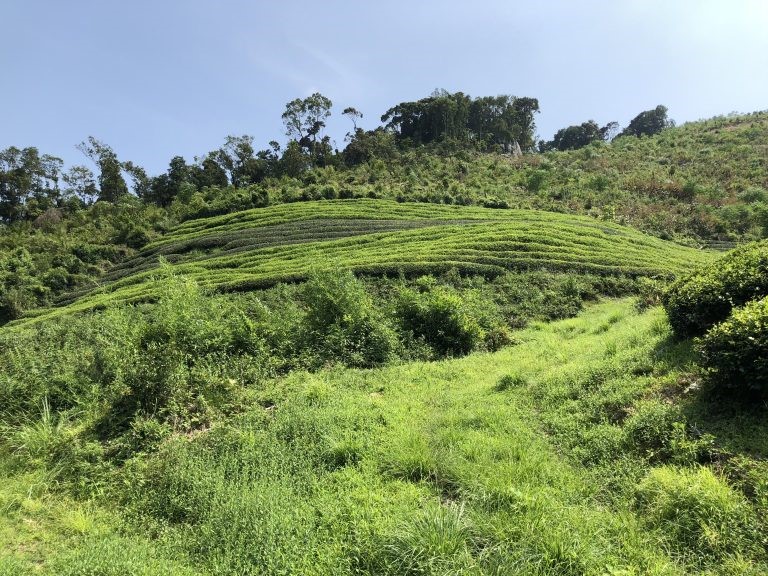
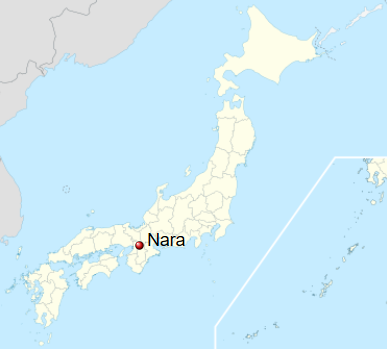
The Yamata-Midori cultivar was created in 1924 as #10 but only got its name in 1953. It is a cultivar for green tea and was discovered in Nara, the old capital of Japan, and it is the only recognised cultivar from this region. It is a late cultivar, only ready 10 days after Yabukita, but it handles cold very well and prefers quickly drained moutain-sides. The leaves grow closer to each other and handle night frost quite well, and the plant is known to develop sugars in defence of the cold.

Seed-grown Yamata-Midori, 2017, Nara, The Tea Crane:

Harvested in spring 2017 at the TsukigasΓ© Kenko Chaen tea farm in Nara. This is the farm of the Iwata family, good for 7ha and founded in 1974. Since 2001 Fumiaka Iwata is the farmer. They work organical since 1984.

Nara

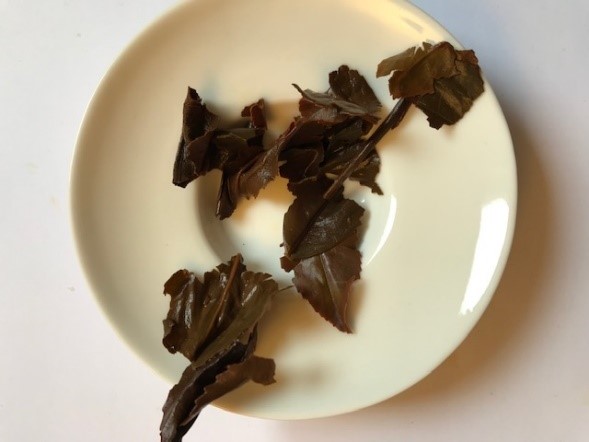
27 euro for 100 gram. Tasted August 6, early in the morning, a root day. 98°C, 3 gram, 2 minutes, 150ml, in a kyusu. The dry leaves are more dark green than dark brown, broken but rather big leaf, several stems. The smell of the wet leaves is intense and richly complex, with honey, fruit and a wonderful flowery aroma. The incredibly intense smell of the infusion wafts up from the cup, sweet, ich and complex (a wonderful way to say good morning). The colour is a coppery brown. The taste is excellent and has depth and complexity. An almost imperceptible but important touch of astringency gives structure. Very full body, incredibly long and a beautiful returning echo. When the tea cools down it gets even better. At this price this is one of the best wakoucha I know.
Second brew, same parameters. The tea gets very toasty, like fresh bread or brioche, the smell of croissants in the morning in a small French hotel that wakes you up, mixed with the heady aroma of a big vase of flowers next to my bed. The very nice round mouthfeel makes it a pleasure to drink, less intense than the first brew but sweet and very elegant, with a nice complexity in its core. This is a very good tea.

😊😊😊😊

The 2017 is sold out, but the 2018 is now available at https://www.the-tea-crane.com/product/organic-first-flush-seed-grown-wa-kocha-black-tea-2017/


Saturday, 12 October 2019

Tea from Gokase, where Terroir rules. Wakoucha Tasting, Tea N°10: Yabukita, Korugi Shuppin, 2017, The Tea Crane

It is all about terroir. That is so for wine, but that is also so for tea. And just like in wine there are places on earth where the circumstances are so that the most beautiful teas/wines are made. In Japan one of these places is Gokase, in the province of Miyazaki. Miyazaki will probably ring a bell for surfers, but in the north of the area are mountains, and Gokase even has its own ski resort. As we also see in Taiwan and China height is very good for tea, and in both countries the name Mountain Tea is a very big compliment. This is also the case in Gokase where the teagardens are at 500 to 750m above sea level. This makes that the nights are a lot cooler than the days, very important for the development of interesting aroma's, and that there is almost every day fog, protecting the leaves from the sun and providing water and humidity. The soil is perfect and there are many wild or semi-wild teabushes. Terroir is also more than the teagarden itself. Here the gardens are surrounded by old cedar woods, garanteeing that there is no chemical contamination from neighbouring farmers. These woods are also good for biodiversity as the birds are nature's most efficient pest-control. It is a point of discussion if we can smell these cedar woods in the tea, and if this is the case if the smell comes from the teabush or from the tea itself which is maybe kept or made in a wooden factory. Though Gokase is a Kamairicha area (some of the best of Japan come from this village) many producers also make black teas.


One of Mr Korogi's tea gardens in Gokase. Copyright The Tea Crane. 

This tea is made with the Yabukita cultivar, good for about 75% of the total of Japanese planting. Yabukita is very popular for green tea as it is very early and very productive, and brings high prices for the farmers. It is not often used for Wakoucha, but when it is results are good if the plants have not been recently fertilized. They often come from colder or higher gardens that miss the really early first harvest dates.

Korogi Shuppin Yabukita Wakocha, 2017, The Tea Crane

Harvested May 12, 2017 on the Gokase Midori Seicha farm, owned by Mr Yoichi Korogi. Only 1 kg of this tea was made. 82.5 euro for 100 gram (import taxes excluded), but The Tea Crane only had 500 gram of it and the tea is now out of stock. Mr Korogi is one of the most renowned kamairicha specialists of Japan, with 30 years of experience in organic farming. He won until now 15 prizes for his teas, and several ones for this one.

August 5, 2019, in the evening, a root day, dry but cloudy. 3 gram, 2 minutes, 150ml, 98°C, in a kyusu. The dry leaves are fragmented and contain snippets of the that are still bright green, almost as if they were added later. The wet leaves smell quite complex, with an interesting sourness, a bit like a Pu'er. The leaves are very broken and there are also twigs. The infusion has a pale coppery colour, quite unusual for a Wakoucha (is this the ageing ?). Highly complex and very unusual smell, that reminded me abit of a young sheng Pu'er. Sweet but also grassy, round but also coarse and a bit brutal, a fascinating tea for experienced tasters. Not a crowd pleaser, more an intellectual tea. Kept on chenging with every sip. A bit like drief fruit, but the without the sweetness. Very light Tobacco also. Quite long and no astringency.
Second brew, same parameters: the same intriguing small, a bit more mellow. Also a bit like some Darjeeling first flush. Long. In the second brew cedar-wood...or is this my imagination.
😊😊😊😊 but only for advanced drinkers.

Sold out (but I still have some 😊).


Wednesday, 9 October 2019

Zairai ! Wakoucha tasting, Tea N°9: Native, Kumamoto, 2nd flush 2018, The Tea Crane

Zairai, or Yamacha, is the name used for teaplants that are truly local and have no known cultivars as parents. They come from a time before the development of cultivars when all teaplants in Japan were 'wild' and seed-grown. For a farmer they make life difficult as all plants in a garden will start budding at a different moment, making it impossible to harvest mechanically. On top of this all plants are slightly different so he has to know his field very well to recognise its typical characteristics. A tea like this is called a 'field blend'. A normal blend is made by putting together leaves of different teeagardens to create a desired taste, but here the blending is unvoluntary and already done when the leaves are harvested. Teas like this can be very complex, are always organic and always unique. As the plants are all different the teas will also be different every year as every plant reacts to the weather in a different way. Teas like this are the unique expression of one little corner of Japan at one specific moment, and that's why I like them so much.


Native, Kumamoto, 2nd flush, 2018, The Tea Crane: 

Harvested in july 2018. 31.5 euro for 100 gram.
Made by Toshihiro Kajihara van de Ocha no Kajihara teafarm in Tsuge in Ashikita village in Kumamoto. 2 ha Farmland in the mountains and at Ono Onsen, at 200 to 300m above sea level. No pesticides. His grandfather started the farm in 1955. Toshihiro is now the 3rd generation and started making tea at 20 (he is now 58). He is a kamairicha-specialist but learned how to make black tea from a Tawainese teacher. The teagarden is the 60 acre big Tengetsu garden with 80 year old tea bushes, descended from plants that were adult in the 50ies and than used to make tea here. The soil is sandy, the garden is at 150m above sea level, NW oriented, fog almost every day.

3 gram, 150ml, 2 mins, 98°C. The dry leaves are black with a few stems and smell like a sweet wood and a bit of cacao. The wet leaves smell quite herbal and sweet like a beef stew but on a plate next to a vase of flowers. Very clear colour like caramel. The infusion is both herbal and flowery, but with a deep sweet touch, like eating cake sitting next to an English flower border. Nice and round mouthfeel, no astringency whatsoever, compact and consistent in taste. Very nice finish. Started complex and magnificent but closed a bit up at the end.
Second brew of almost 4 minutes, accidently. Still a very nice tea, no astringency.
😊😊😊😊


The Tea Crane is currently selling the 2019, a quite difficult but very interesting year: https://www.the-tea-crane.com/product/kumamoto-native-wakocha-2019/


Friday, 4 October 2019

Fickle but Fine: Fuji Kaori. Wakoucha Tasting, Tea N°8: Fuji-kaori, Ureshino, 2nd flush 2017, ThΓ©s du Japon

One of the interesting things about the Japanese teascene is the sometimes bewildering variety of cultivars. The most popular, Yabukita, takes up to 75% of Japanese production, for some others the quantities are extremely small. Fujikaori is one of these, and as it is a very aromatic but also notoriously difficult cultivar, it is only used by a handful of farmers in specific areas where kamairicha is made. The floral aroma's are beautiful but not a succes for sencha. Kamairicha* makers however love it, for the same reason. It was originally developed in Fujieda (hence the name) in Shizuoka by Mr Morizono Ichiji and Koyanagi Mitsugi and is a crossing of Yabukita and Inzatsu 131, itself 50% of Assam descent. For those who like the study of cultivars, this is a very instable one, because the very reliable Yabukita delivered the pollen here and the instable Inzatsu 131 the flower. Other cultivars, also highly aromatic, did it the other way round and are more reliable. It seems to work well for Wakoucha.

Fujikaori, Ureshino, 2nd flush 2017, ThΓ©s du Japon:

Ureshino is a hot spring resort in the mountainous Southwest of Saga prefecture, not far away from Nagasaki. It was in Saga that in 1191 Japan's tea history started when a monk brought teaseeds from China. In Ureshino tea is made since the end of the 15th century.


Mr Ota's farm is about 100 years old and works organic since 1987 when father Shigeki became ill due to the chemicals he used on the farm.  The tea gardens are spread over 15 different locations at  150 to 500 m above sea level. The slopes force the family to do the weeding and plucking manually, and makes it difficult for them to produce at low prices or to make money on the popular early first flushes. The farm is not big, they only have 3ha of tea, and specialise in kamairicha and tamaryokucha. Mr Yusuke Ota is the current owner. The tea we tasted here is a second flush, the first flush was used for green tea.


Tasted the 4th of August 2019, in the morning, under a blue sky, nice weather, a root day. 3 gram, 150ml, 98°C, kyusu and 2 mins.
The wet leaves smell beautiful, and touches of vanilla remind me of sunday-afternoon cakes with my mother. The aroma is also very floral. The infusion is a remarkably deep reddish brown, different from many other wakoucha I tasted. It delivers a very high complexity but it is also comfy and warm and homey, and I could not get enough of it. The mouthfeel is fine and even a bit on the thin side but it fits well with the tea and its nice touch of astringency. In the beginning the sweetness of the flowers dominate, but then it gets supported by the astringency, and it lingers long in the mouth.
The second brew was nice, friendly and round, without the complexity but still with sufficient depth to make it worth the trouble.
😊😊😊😊


Sold out at ThΓ©s du Japon.

* kamairicha is a Japanese tea made the Chinese way...not steamed but pan-fried. These teas are less astringent than sencha and farmers need different equipment so tend to specialise. Made in specific areas. The taste is often sweeter and mildly roasted.

Tuesday, 1 October 2019

Fertilizing and black tea. Wakoucha Tasting, Tea N°7, Benifuki, Nara, 2018, The Tea Crane

Lots of the samples I tasted mentioned that they come from organic gardening. There is a very good reason for this. Chemical fertilizers and pesticides were as popular in Japan as in other parts of the world. Japan has a similar history of reaction to this, with farmers becoming ill themselves and turning away from them, and then tasting and seeing the difference between the two methods. The popularity of organic farming is obvious and growing, as in Europe, but for Wakoucha there are some additional elements.

Fertilizing is very popular amongst the big producers of green tea in the lower areas. It increases production and often increases the sweetness sought after by many drinkers. When farmers started to make black tea they found out that heavily fertilized tea harvests were behaving oddly in the wilting and oxydation process, proving a lot more difficult to achieve good results. Tea gardens for black tea also tended to be situated higher, where some of the main factors for their aroma's are available: lots of water (fog) but with good drainage, strong differences between night and day and often richer soil with more clay, making fertilization unnecessary. Pesticides were easily banned because the colder environment made insects less a problem and some insects even proved to be a blessing, making the teas sweeter, like in the Taiwanese 'grasshopper' teas.

The Iwata family works organically since 1984 and the current owner, Fumiaka Iwata, has continued this. The gardens on the higher parts of the hill are never fertilized, the lower ones only receive forest material, never artificial fertilizer and not even animal waste as this influences the taste too strongly. The Benifuki plants for this tea were planted in 2005 and come from three gardens: the Iguchi Yama garden (20a at a height of 230m above sea level, a mixture of sand and clay and surrounded by forrest), the Yama no shita danchi garden (5a, 250m above sea level, strongly sloped, south oriented) and the Miyayama garden (8a, 300m above sea level, southeast oriented and strongly sloped, red clay, on top of the mountain). For the production of the teas they have a small unit on the farm so the freshly plucked tea does not have to travel.

Fumiaki Iwata in one of his teagardens


Benifuki, Nara, 2018, The Tea Crane: 

Harvested 17-18 May 2018 at TsukigasΓ© in Nara. Tasted the 3rd of August, 2019, variable summer weather, a fruit day. 3 gram, 150ml, 2 mins, 98°C, in a kyusu.
The wet leaves have a strong sweet undertone, not unlike the benihomare, but here with more wood, and the complex smells of a working kitchen. The majority of leaves is brown, with a few dark green ones. Nice and clear smelling infusion, with fruit jam and some spiciness. The mouthfeel is delicate and clear with a touch of astringency, but very light. The finish is long and rich, not unlike good Darjeeling, but with a very typical Wakoucha impression that makes it different. A very well-blanced tea.
A second steeping with the same parameters brought formward a very nice smell, with tropical woods and a very soft and nice taste, absolutely worth the trouble. The third brew was still very pleasant.
😊😊😊(😊) or 😊😊😊😊, I had mood swings with this tea...


Saturday, 28 September 2019

Benihomare, the ancestor. Wakoucha Tasting, Tea N°6: Benihomare, Nara, 2018, The Tea Crane

The third of our 'black' cultivars is the oldest of them all. It is a direct descendant of one of the plants that Tada Motokichi brought from India in 1877, and its ancestor was an Camilla Sinensis var. Assamica, very different from the 'green' cultivars in Japan. It was a lot easier to make a black tea from an Assamica than from the other Japanese plants as the greens oxydate difficultly. For wakoucha a cultivar was needed that reacted well on oxydation. It was identified in 1942 in one of the teagarden's from Tada Motokichi and in 1953 it was one of the first cultivars to be registered in the new system for registration. Between 1955 and 1971 it was widely planted and quite popular but the demand collapsed and many Benihomare were pulled out to make place for more popular green cultivars as Yabukita. It is a late cultivar, an advantage for the farmer, but the productivity is low. It has become quite rare now, and of all the samples tasted only this was really identified as Benihomare. They come from a 2005 planting.

You can find a nice picture of this cultivar here: https://www.myjapanesegreentea.com/benihomare/benihomare-2

Benihomare, Nara, 2018, The Tea Crane:

Harvested May 21 2018 at TsukigasΓ© in Nara on the farm of the Iwata family. 37 euro for 100 gram.

The Iwata family owns their 7ha teagarden since 1971, and they work organic since 1984. Since 2001 Fumiaki Iwata is the farmer and he has continued the organic gardening. Teagardens on the higher parts of the hill are not fertilized at all, the lower gardens only receive forest material, not even animal waste. He likes to experiment with black teas and this Benihomare comes from the Iguchi Yama garden (10 acres at a height of 230m, a mixture of sand and red clay and surrounded by forest). They produce the tea in a small building on the farm to keep control and the withering process was kept short to limit assamica-astringency.

Tasted August 3 2019, variable summer weather, clouds, wind and sun, a fruit day. 98°C, 2 minutes, 3 gram, 150ml in a kyusu. The dry leaves tasted fleshy and sweet. They are greyish-green in colour with some brown ones and the material contains stems. The leaves appear to be quite complete. Wet, they smell delicious and the aroma from the lid of the kyusu is very sweet. The wet leaves themselves smell very floral and are dark green or brown in colour. The infusion is a nice redbrown. The smell of the tea is extremely pleasant and yummy, rich but also with the freshness of fruits and a very nice structure and balance. The taste is immediately sweet and soft, very intense and round, very persistent and long, and very complex. After a while it changes into a more smokey/fleshy element, most clearly perceived when slurping. The aftertaste is very long. A second brew with the same parameters is a bit shorter but still very sweet and delicious. When a spoon of semi-skimmed wilk was added the tea turned into a very complex and extremely delicious drink, like a high-complexity cacao-blend, and if anyone could make this in quantities and consistent in taste, this tea has the potential to please everybody. 😊😊😊😊
(Still) available at https://www.the-tea-crane.com/product-category/the-tea-crane-black/


Monday, 23 September 2019

Wakoucha Tasting, Tea N°5: Benihikari Gokase, first flush 2017, ThΓ©s du Japon

Benihikari is one of the other 'black' cultivars and one of my favourites. It is also known as #28 and is a crossing between Benikaore (an Assamica often used to make Hojicha) and a cultivar that is the result of a crossing between a Kagoshima Zairai and a Makura Cn1 from China. It was recognised in 1960. It flushes rather late but this is not a disadvantage, it allows the farmer to spread his harvests over a longer period, and it is very productive. The ability to harvest in waves, first the early green's like Yabukita and later the others simplifies the life of a farmer seriously. It is one of the farmer's reasons to produce black tea when the equipment is available.  

Source: https://www.bambootravel.co.uk/files/img_cache/47650/1400__1507886458_MtAso2.jpg?1507886493


Benihikari, 1st flush 2017, Gokase, ThΓ©s du Japon: 

21.5 euro for 100 gram at ThΓ©s du Japon https://www.thes-du-japon.com/index.php?main_page=index. Harvested 1st of June 2017, late for a first flush. The farmer is Mr Miyazaki from the Miyazaki Sabou teafarm, a kamairicha and wakoucha specialist. The farm is situated at a height of 650m in a mountainous region where the evenings are already cooler and the difference between night and day temperatures are bigger. The garden was founded in 1930 and is organic since 1985 (when a family-friend died from pesticides) and certified since 2001. Gokase is a village of 3800 inhabitants in the north of Miyazaki on the Island Kyushu, and it looks out on Mount Aso, Japan's largest active volcano.
Tasted 31 of July, windy with intermittant rain, cool but nice, a leaf day. 98°C, 3 gram, 150ml, 2 minutes, in a kyusu. The dry leaves have a very interesting smell with fruit, spices and a sniff of bacon. Their colour is a greyish dark green and there are lots of stems. The wet leaves smell beautiful, with fruit (raisins), spices (kitchen, cinnamon) and a great freshness (the vendor mentioned menthol). Some of them are quite big and green, the other ones are more cut up and brown. The infusion is complex, like spices that have already been blended into a sauce. There is a big difference when the aromas are liberated by swirling or sniffing them from the empty tasting glass. Beautiful coppery colour. Takes a subtle start in the mouth but opens very softly and easily in a nice complex taste pattern, no astringency. Nice evolution in the mouth and a rather striking aftertaste of menthol (from the stems ?). Clearly cinnamon in the echo. A tea for lovers of complexity and it reminded me a bit of the sensations of drinking a good and complex wine. A very civilised wakoucha. A second brew with identical parameters delivered a very different smell for the wet leaves, the samen kitchen but abandoned and cooled down. The taste and smell are mellow and nice, very pleasant but no longer complex. 😊😊😊(😊)


Native & Wild. Wakocha Tea Tasting N°33: Tokuya's Native Wild Wakocha 2017, The Tea Crane

Tokuya Yamazaki was born in 1983 on the Kamo Shizen Noen farm in Kyoto, in a small town called Kamo, on the border with Nara. When he was a...